

Chasing New Sounds: Bassist Bradley Mellen on Artistry, Influence and Mentorship
 By Stephanie Matthews, executive director of A Tribe for Jazz
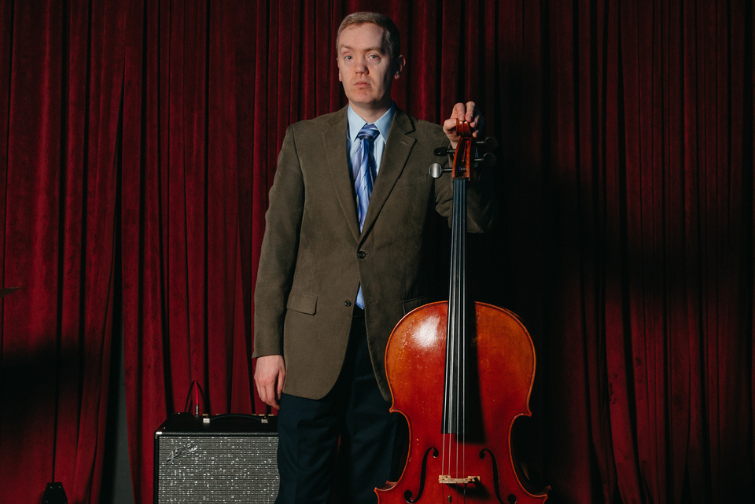
Bassist Bradley Mellen, a longtime collaborator with A Tribe for Jazz, brings a deeply curious, exploratory spirit to every project he touches. In this conversation, he reflects on his musical path, his influences and his role in shaping the next generation through our Jazz Lab.
Stephanie: Brad, what first pulled you toward the bass? Do you remember the moment you realized this wasn’t just an instrument—it was your instrument?
Brad: There wasn’t any one specific moment. was already singing and taking piano lessons when I had the opportunity to start playing a string instrument in my school’s orchestra program, and I chose the bass more or less on a whim. As I started becoming interested in playing jazz, I think I was gradually drawn to the bass parts as the element of the music I found most intuitive based on my previous musical experiences, and I had a number of great teachers who encouraged me and provided me with opportunities. Because of its relative ubiquity, the bass also opens up the chance to explore a multitude of different musical styles.
Stephanie: That’s fascinating. I’m wondering, when you’re developing a new idea or prepping for a performance, what does your creative process actually look like? Organized chaos? Color-coded charts? Late-night grooves?
Brad: I’m always looking to play some interesting, obscure tunes that aren’t just the same tunes everybody always plays, so I end up spending a lot of time on the computer late at night transcribing charts so I can convince other musicians to play them with me. Aside from that, and the occasional rehearsal when necessary and/or time permits, a lot of my musical exploration and preparation just takes place sporadically in my head, thinking through different musical ideas whenever my mind wanders. I probably spend less time sitting at home actually playing my instruments than you might expect.
 Stephanie: So tell us, who are a few musicians—past or present—who have shaped your sound the most, and what about their voice or approach stays with you?
Brad: The first bassist I paid close attention to was Ron Carter. His influence remains evident in my playing in myriad ways, but I’m perhaps most interested in his unceasing quest to find ways to push arrangements in new directions and the tools he uses to do that. More recently, I’ve been fascinated by the playing of Isao Suzuki, who has an intense, almost wild approach to the instrument, resulting in a unique and very personal sound that has influenced me to seek new sounds to create myself. I should also mention my college professor, Dr. Paul Robinson, who taught me the technical skills to identify those sounds on the instrument and inspired me with his holistic approach to music, having played across a wide range of genres and settings.
Stephanie: We love working with you as a collaborator. How has the experience of working with A Tribe for Jazz influenced your artistry and expanded the way you think about jazz today?
Brad: Nowadays, I think jazz is often a genre that people don’t always have a chance to discover and take a real interest in until later in life, so it’s interesting to explore how it can connect to younger generations and their experiences, and maybe look for clues as to how it may evolve going forward. It’s also always refreshing to observe the reactions of younger audiences who lack the ingrained assumptions and cultural associations that older listeners naturally accumulate over time.
Stephanie: As you know, 2026 will be the second exciting year of the Jazz Lab program, which teaches middle-schoolers STEM learning through music. In the lab, you work closely with young creatives. What do you hope they take away from your mentorship—musically or personally?
Brad: Mostly just a curiosity to ask questions and explore things they’re interested in.
 Stephanie: Shifting gears slightly, Columbus has many up-and-coming young musicians. What’s something you’ve learned from working with young players that surprised you or shifted how you approach your own craft?
Brad: This year I’ve had some occasion to play with some younger jazz musicians who are eager to try new tunes and explore new ideas, and rather than shifting my approach per se, I think it’s just encouraged me to pick back up on some ideas I was working on 10 or 20 years ago that I hadn’t had much chance to develop for a while.
Stephanie: As we wrap up, I’ve gotta know — what’s currently living on repeat in your playlist—and what does it say about where your head is musically right now?
Brad: Surprisingly, the older I get, the more I want to listen to recordings I haven’t heard before and not repeat the same albums over and over. That said, recently I’ve been digging into the music of bassist and pianist Yoshio “Chin” Suzuki, most of which is on the calmer and more peaceful side. I think I may have more interest in small, quiet sounds than the average jazz musician.
Stephanie: Bonus question! Columbus has its gems. What are one or two places—restaurants, parks, neighborhoods—that always recharge you or spark creativity?
Brad: I would be remiss not to mention Ginger Rabbit, a wonderful intimate jazz club where I am fortunate enough to play on a regular basis. Aside from music venues, I think I gravitate towards the neighborhoods where you can actually walk around and don’t need 20 minutes in a car to get everywhere, such as the Old Dublin / Bridge Park area.
Look for Bradley participating in A Tribe for Jazz’s Jazz Lab program in 2026!
This article is part of a bi-weekly column brought to you by the Greater Columbus Arts Council as part of the Art Makes Columbus campaign. Explore a calendar of events, public art database and artist stories at columbusmakesart.com. To learn more about GCAC grants visit gcac.org.