

Yusef Ferguson on Melding Traditions, Place and Identity in “Greater Columbus”
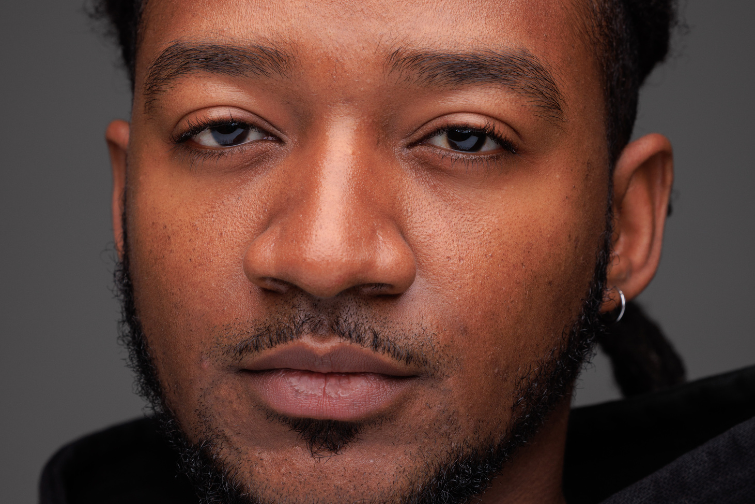
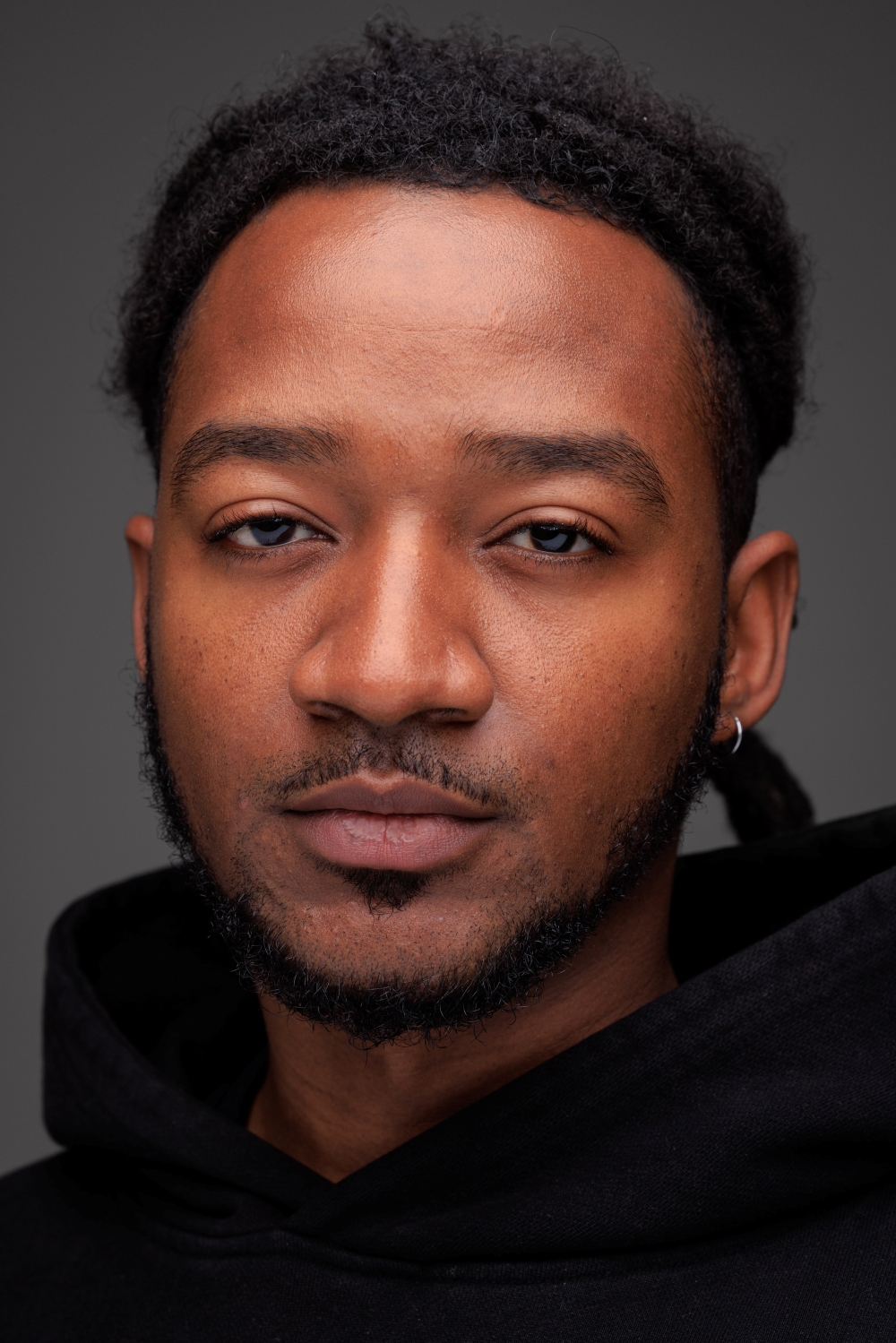 Yusef Ferguson is one of six central Ohio artists featured in Greater Columbus: The 2026 Visual Arts Fellowship Exhibition on view at the Columbus Museum of Art until Sept. 20. Presented biennially in partnership with the Greater Columbus Arts Council, the exhibition celebrates some of the region’s most compelling contemporary artists. Ferguson’s work in the exhibition is a video installation that draws from a family archive to examine his own relationship to communities of place and faith. Hear directly from Ferguson about his practice and the work on view during Greater Columbus: Up Close with Yusef Ferguson, a free artist conversation on Thursday, Sept. 10, from 6-7 p.m. at the museum.
Lydia: Your work in Greater Columbus brings motifs and histories from two different religious traditions together — how did you decide to put them in conversation, and why?
Yusef: The idea of these two faiths not existing in conversation is more foreign to me than the inverse. I grew up seeing Muslim community members setting up chairs at the front of the masjid for Christian relatives of the deceased at funerals, even though it is our custom to sit on the floor. I grew up seeing my Christian grandmother go out of her way to use halal marshmallows on her sweet potatoes at Thanksgiving to accommodate her Muslim grandchildren. These small moments of acceptance and care are foundational to my perspective of the world. For me, faith has always served as a bridge of understanding between people as opposed to a divider. To incorporate this emotion into the actual layout of the installation, I took inspiration from the chapels/meditation/prayer rooms that are commonly found in airports, hospitals and other public spaces. These rooms tend to offer a variety of religious texts and prayer items that cater to the needs of multiple faiths. These spaces served as inspiration for me on how to physically represent this idea of faiths in dialogue.
I am also fascinated by how these two faiths, independently of one another, created an ethic of spiritual independence and self-determination in the history of my family. My paternal side of the family traces its history to an all-Black town in Oklahoma called Boley, where my great-great-grandfather was pastor of a local church and other family members similarly became cornerstones of the community. My mother’s side traces its roots to the Northeast, specifically Pittsburgh, where my grandfather is from, and to New York, where he became a school teacher and minister in the Nation of Islam. In both stories, faith became a path to a life of independence despite the racially oppressive norms of the time. Their spirit of self-determination still exists as the thread to connect our family even across differences of belief.
Lydia: The relationship of place and identity is a major theme in your work — how does Columbus fit into your story, as a person and as an artist?
Yusef: In my artistic practice, I am always interested in the intersection between my own family history and mythology. Wherever I move, I spend time researching any possible family history in archives and local legends potentially in the area. I believe that understanding where you come from and from whom is an essential component to understanding who you are; the concept of “knowledge of self.” Many myths and legends stem from exaggerated stories of real events, and thus provide insight into a community’s values and how it sought to be perceived. As I have learned more about the history of the city of Columbus and the state of Ohio as a whole, I have discovered that I have roots here on my maternal side, including a possible relation to the Springfield legend Davey Moore, which has opened up a host of questions for me about how such a legend influenced parts of my upbringing. I am excited to venture further down that rabbit hole to continue to explore what hidden connections I have to the region and how that adds to this canon of history I have been working to unearth.
In my personal narrative, Columbus represents a major time of transition and growth. I believe that the city you call home can be indicative of where you are in your journey. I was born and raised in Atlanta, GA; I moved just north of Los Angeles to complete my MFA before moving here for a teaching fellowship at CCAD. There were a few nomadic years, just before grad school until my move to Columbus, where I never lived in the same place for longer than 12 months. My time here has facilitated a transition from that period of my life and provided me with space to slow down and reflect, for which I am both constantly challenged and eternally grateful.
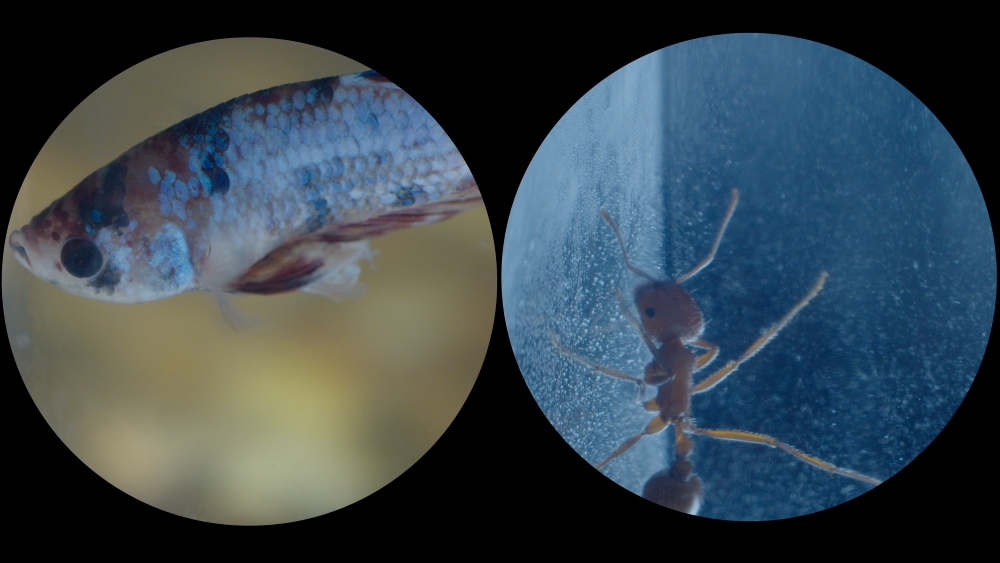
Yusef Ferguson, In a Barrel, ButYouDontWannaDie, 2026. Video with sound. Courtesy of the artist.
Lydia: You are an active part of the arts community in Columbus — you’re an educator, a videographer and an artist. How do these different roles inform one another? How does the Columbus art ecosystem influence your work?
Yusef: I feel like the term artist truthfully encapsulates everything that I do, and the other titles are branches that extend from that tree. Each of these roles exists as an essential component to my success in the other. As an educator, the classroom forces me to constantly challenge my own perceived expertise, which strengthens my fieldwork. In turn, working in the field is constantly feeding me inspiration for how to make my classroom a more dynamic and engaging space for my students. It is an immense privilege to have the skills sharpen each other naturally in such a way.
The arts ecosystem here in Columbus has been a major inspiration and motivator. There really is a unique flavor to each neighborhood, whether it’s King-Lincoln, Franklinton, etc., that presents the opportunity for a unique experience every time. The grassroots work being done in these neighborhoods is one of my favorite aspects of the city as a whole. There is a freshness that comes with being in a place that is cultivating its own ecosystem in real time, largely independent of outside influence and standards. I thoroughly enjoy the variety of artistic communities that exist in the city and am excited to witness the continued growth of these communities.
Lydia: What’s exciting to you about Columbus right now?
Yusef: I am a huge football (soccer) fan, and all of the buzz in the city around the World Cup was such a great time. One of my favorite aspects of Columbus is its identity as an international city, so it was beautiful to see so many different people and cultures come together around the tournament. Due to this international identity, Columbus is also an unexpected foodie town, which is hands down my favorite part of the city. Aside from that, I have been visiting a lot of local galleries and theaters. There are several independent theaters in Columbus that show special screenings of older films or 35 and 75mm projection, and I try to make a screening as often as I can.
Hear Yusef Ferguson speak about his practice during Greater Columbus: Up Close with Yusef Ferguson, a free artist conversation on Thursday, Sept. 10, from 6-7 p.m. at the Columbus Museum of Art. His work is featured in Greater Columbus: The 2026 Visual Arts Fellowship Exhibition on view at the museum through Sept. 20.
About the author
Lydia Simon is the director of marketing and communications at the Columbus Museum of Art.
This article is part of a bi-weekly column brought to you by the Greater Columbus Arts Council as part of the Art Makes Columbus campaign. Explore a calendar of events, public art database, artist-curated public art tours and stories at columbusmakesart.com. To learn more about GCAC grants visit gcac.org.